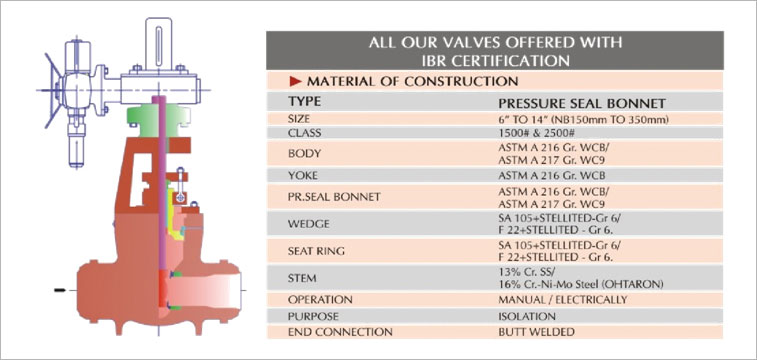
Gate valves are characterized as having either a rising or a nonrising stem. Rising stems provide a visual indication of valve position because the stem is attached to the gate such that the gate and stem rise and lower together as the valve is operated. Nonrising stem valves may have a pointer threaded onto the upper end of the stem to indicate valve position, since the gate travels up or down the stem on the threads without raising or lowering the stem. Nonrising stems are used underground or where vertical space is limited.
Valves may be operated manually, either by a hand wheel, lever or pedal. Valves may also be automatic, driven by changes in pressure, temperature, or flow. These changes may act upon a diaphragm or a piston which in turn activates the valve, examples of this type of valve found commonly are safety valves fitted to hot water systems or boilers.
Cast iron may be used for the heating vessel of Industrial water heaters. Although such heaters are usually termed "boilers" in some countries, their purpose is usually to produce hot water, not steam, and so they run at low pressure and try to avoid actual boiling. The brittleness of cast iron makes it impractical for high pressure steam boilers
We make and supply cast steel Gate valves NB 65mm TO 100mm to our customers. The end connection of our gate valves are butt welded and are quality tested according to the API-598 standards. These have the size range of 2' TO 14' (NB 15mm TO 50mm) and valve seat of STELLITED- Gr 6 type.